Texas is big league baseball country in the most literal sense — two franchises, two metropolitan areas, and a rivalry that has produced some of the most compelling games in the American League over the past two decades. The Texas Rangers and Houston Astros represent different cities, different cultures, and different approaches to building a championship roster, yet both have arrived at the same destination: genuine World Series contenders with passionate fanbases and modern facilities that rank among baseball’s best. Fans following MLB action with markets across all major matchups can find comprehensive coverage at Dbbet.
Texas Rangers: From Expansion Franchise to World Series Champions
The Texas Rangers have traveled one of baseball’s longer roads to championship glory. Founded as the Washington Senators in 1961 and relocated to the Dallas-Fort Worth area in 1972, the franchise spent decades as a competitive but ultimately unfulfilled team — producing Hall of Fame talent including Nolan Ryan, Ivan Rodriguez, and Adrian Beltre while repeatedly falling short of the ultimate prize. Back-to-back World Series appearances in 2010 and 2011 ended in heartbreak. The 2023 season finally delivered — the Rangers won their first World Series title in franchise history, completing a remarkable turnaround from a last-place finish just two years earlier. The championship validated years of roster construction and gave the Dallas-Fort Worth region its first baseball title.
The Houston Astros: Rebuilding to Dynasty
The Houston Astros’ transformation from one of baseball’s worst franchises to a sustained dynasty is one of modern sport’s most studied organizational stories. After finishing with losing records for five consecutive seasons between 2011 and 2015 — a deliberate rebuilding strategy that drew both criticism and eventual vindication — the Astros emerged with a core of homegrown talent including José Altuve, Alex Bregman, and Carlos Correa that powered them to the 2017 World Series title. Further appearances followed in 2019 and 2021, with another championship in 2022 cementing Houston’s status as the defining baseball dynasty of its era. The Astros’ analytical approach to roster construction and player development became a model studied and copied across the league.
Astros vs Rangers: The Rivalry Defined
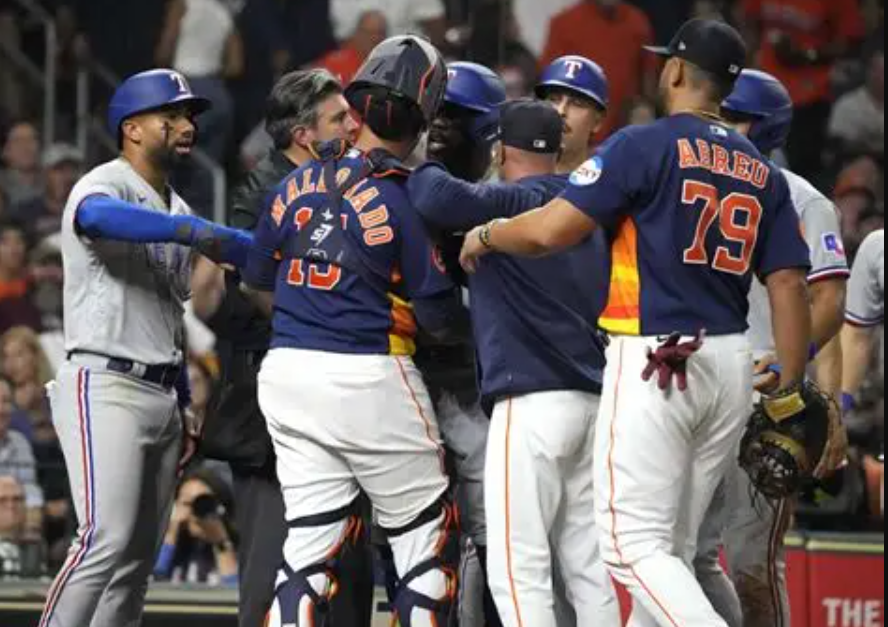
Astros vs Rangers carries a particular intensity because both franchises compete within the AL West division, meaning they meet frequently across a full season with direct playoff implications attached to every series. The rivalry sharpened considerably as both teams became legitimate contenders simultaneously — a circumstance that transforms routine divisional matchups into genuine tension. The 2023 ALCS, won by the Rangers in seven games on their way to the World Series, added a new chapter of genuine bitterness to the relationship. Astros fans remember the Rangers’ celebrations on their field; Rangers fans remember the joy of eliminating the team that had tormented the division for years. That shared memory gives subsequent matchups a weight that neutral observers can feel even through a broadcast.
Globe Life Field: The Rangers’ Modern Home
The Rangers completed their move to Globe Life Field in 2020 — a retractable roof stadium in Arlington that replaced the beloved but weather-challenged Globe Life Park next door. The new facility was designed specifically to address Texas’s brutal summer heat, which had long made afternoon and early evening baseball genuinely uncomfortable for players and fans alike. The retractable roof allows games to proceed in climate-controlled comfort regardless of temperature outside, solving a problem that had complicated Rangers attendance for decades. The stadium seats approximately 40,000 and features a natural grass surface, modern concourse design, and sightlines that have drawn widespread praise from visiting players and baseball writers. Hosting the 2020 World Series in a bubble arrangement gave the facility an unusual introduction to the national stage.
Minute Maid Park: Houston’s Beloved Ballpark
Houston’s Minute Maid Park carries a character that newer stadiums struggle to replicate. Opened in 2000 and built within a converted historic train station, the park incorporates the original building’s brick facade and a genuine piece of railroad history — a vintage locomotive that travels along a track above left field when the Astros hit home runs. The retractable roof handles Houston’s equally demanding heat and humidity. Crawford Boxes in left field — a short porch that rewards pull hitters dramatically — have influenced roster construction decisions and created some of the park’s most memorable moments. Astros fans have developed a fierce attachment to Minute Maid that reflects both the stadium’s physical character and the championship memories it houses.
Texas Baseball Culture: What Makes the State Unique
Texas baseball culture runs deeper than two professional franchises. The state produces a disproportionate share of major league talent through a combination of year-round playing weather, fiercely competitive high school and college programs, and a cultural identification with the sport that stretches across generations. The University of Texas, Texas A&M, Rice, and TCU all run programs that regularly send players to the draft. High school baseball in Texas operates at a standard that coaches from other states consistently cite as a benchmark. The sheer size of the state’s population combined with its baseball infrastructure creates a talent development environment that benefits both Texas franchises through draft positioning, scouting presence, and a fan base that understands the game at a sophisticated level.
Roster Construction: Two Different Philosophies
The Rangers and Astros have approached roster building from meaningfully different angles in recent years. Houston built through the draft and player development — their championship core was largely homegrown, with targeted free agent additions supplementing rather than replacing internal production. The Rangers’ 2023 championship was built more aggressively through free agency and trades — signing Corey Seager and Marcus Semien to large contracts, acquiring Jacob deGrom, and making deadline additions that transformed a developing roster into an immediate contender. Neither approach is categorically superior, and both have delivered World Series titles within a two-year span. The philosophical contrast gives the rivalry an additional intellectual dimension beyond simple on-field competition.
The Impact of Both Teams on MLB’s Western Geography
Having two legitimate championship contenders in the same state has elevated Texas’s position within baseball’s broader geography considerably. The AL West has become one of the league’s most competitive divisions — the Rangers and Astros competing simultaneously has pushed the Los Angeles Angels, Oakland Athletics, and Seattle Mariners to invest more seriously in roster quality simply to remain relevant in a division where mediocrity gets exposed quickly. Texas markets generate substantial local broadcast revenue, strong attendance figures, and national television interest that benefits the entire league commercially. The concentration of baseball talent, organizational sophistication, and fan passion in a single state has given MLB a geographic stronghold in a sports market that the NFL has historically dominated.
What Both Franchises Need to Sustain Success
Sustaining championship-level performance in modern baseball requires continuous organizational investment rather than a single successful construction cycle. The Astros face the challenge of retaining core talent against competitive free agent markets while rebuilding their pitching depth after the departure of several key arms. The Rangers must prove that their 2023 championship was a foundation rather than a peak — converting their core of young position players into consistent playoff performers across multiple seasons. Both franchises operate in large markets with substantial revenue bases, giving them financial flexibility that smaller market teams cannot match. The question for both organizations is whether their front offices can maintain the decision-making quality that produced championships when the inevitable roster transitions and injury disruptions arrive.