
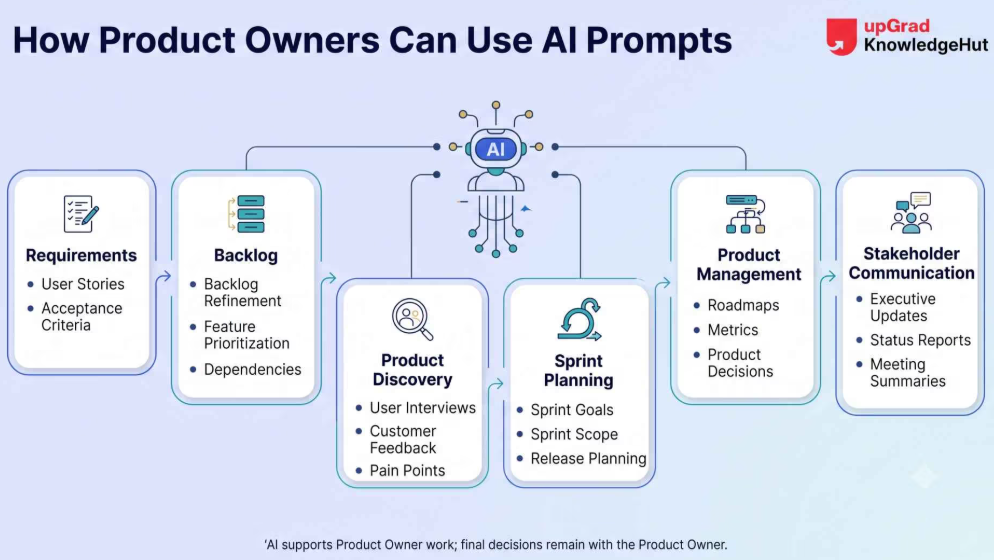
Managing product backlogs in an AI project takes on a different set of complexities than developers used to in traditional software. With AI products focused on data pipelines, indeterministic results, and ever-hustling model retraining, taking specific steps for effective backlog management becomes essential for maximizing bottom-line value. Starting the journey right by enrolling now in CSPO Certification can equip you with the essential skills for guiding an AI product toward profitability through disciplined product management.
The Special Considerations for AI Backlogs
A product backlog for AI software differs from standard application development in several key ways. In a typical project, user stories take the form of strict requirements with binary acceptance criteria. Does clicking this link load the desired page or not? Does submitting a username and password grant access or not?
In an AI project, backlogs consist of investigative data sprints, iterative deep learning model retraining, data auditing and cleansing activities, and evaluation of the model’s probabilistic outputs. A single user story for AI software often involves large sets of data, multiple machine learning algorithms, and a detailed analysis of the model’s accuracy and bias.
This creates challenges for a Product Owner tasked with ensuring these various data science and AI elements contribute to overall business objectives without getting side-tracked by the latest innovations in neural networks, computer vision, or natural language processing technology.
Strategies for Managing AI and Data Science Product Backlogs
When you have multiple simultaneous projects underway, including AI development initiatives within an organization, standard backlog grooming becomes challenging, and you need to invest in additional process improvement measures.
First and foremost, recognize that the research and development aspect of AI software requires a separate set of tasks. Allow your data science team to pursue the opportunities they identify with integrated, time-bound research spikes. Set hard limits for these AI explorations to prevent them from consuming all available resources. Set criteria for ending the spike and deciding if and when to adopt the latest innovations.
Next, make your backlogs more data-centric by categorizing them based on the particular data pipeline element being worked on. Break down a large AI-centric sprint into manageable chunks by separating it into distinct backlogs for the model, for the infrastructure and API layer, for the application itself, and for monitoring and model retraining. This will enable the engineering team to do their technical design work while also allowing executives to see concrete deliverables and value.
Finally, define acceptance criteria in terms of measurable and auditable standards, using probabilities where results cannot be deterministic. Even when working with AI/ML models, the final results need to have concrete requirements, such as a given margin of error or response time, before they can be considered delivered.
Improving Product Owner and Product Manager Processes for AI Projects across the Enterprise
If you are a Product Manager overseeing an enterprise AI software initiative, your backlog management responsibilities become even more challenging when you start collaborating with different teams and stakeholders who contribute data assets, model architecture suggestions, application-layer improvements, and other components to the overall solution.
Product leaders at this level often need advanced project management training to keep multiple teams and their leaders focused on delivering value while also collaborating on cross-functional aspects and aligning on architectural decisions.
This is where an effective SAFe POPM certification becomes necessary, as it teaches leaders and managers how to balance the multiple product ownership aspects of an AI initiative while also setting direction and goals for their teams.
Collaborate with a training partner like Simpliaxis to obtain the project management and product ownership skills required to handle complex portfolios, drive multiple teams toward common goals, and reduce interdependencies between product components.
Managing AI and Big Data Software Development Backlogs in Practice
As you continue to work with AI initiatives, data science projects, and machine learning applications in production, consider implementing the following action items in your product management practices:
- Time-bound data exploration and research activities to avoid having them consume excessive resources
- Set expectations that AI-assisted processes have alternatives and fallback methods in case of failure or unavailability
- Allow time for model retraining and data pipeline maintenance by adding these as routine backlog items
- Store and version control your prompts as you would any other element in a machine learning stack
The Evolving Role of a Product Owner in the Age of Artificial Intelligence
Artificial intelligence will increasingly play a role in enterprise application development, and the product owner has a vital role in this space. By learning the right skills through quality training and certification from Simpliaxis, you can acquire the competencies to guide AI-assisted application development efforts while also ensuring that these projects deliver high value to the enterprise.