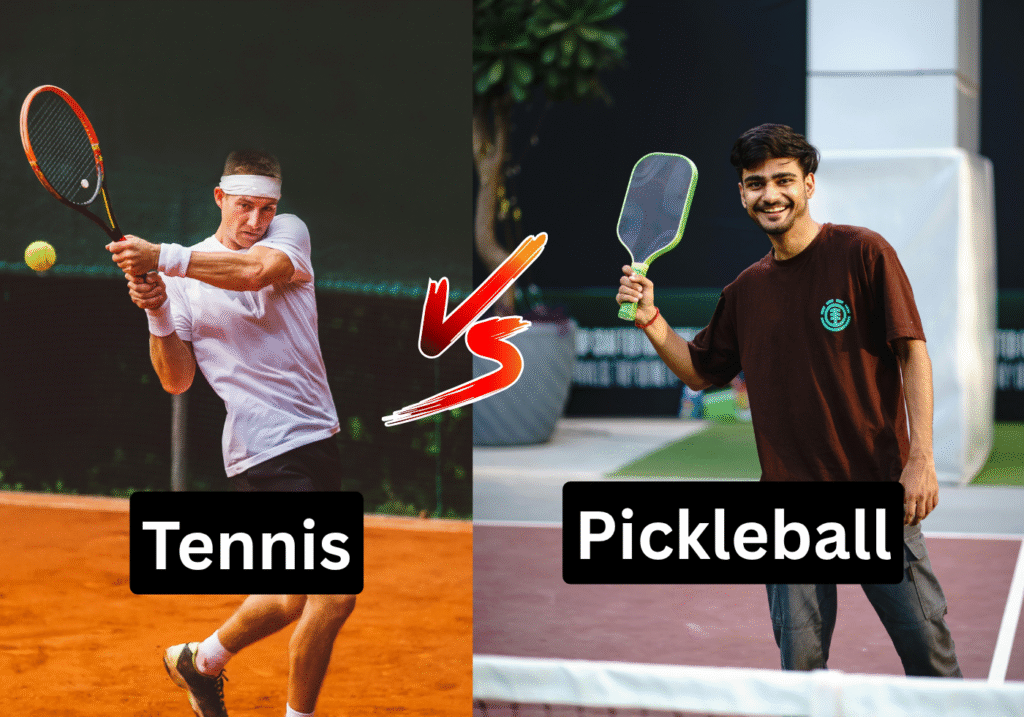
Few racquet sport comparisons generate as much genuine curiosity as this particular matchup, especially given pickleball’s explosive recent growth and its frequent description as a smaller, more accessible cousin of traditional tennis. Understanding exactly how these two sports differ, from court dimensions through fundamental gameplay rules, helps players considering either sport make genuinely informed decisions about which suits their preferences. Fans wanting to follow racquet sports coverage can check the latest updates at Dbbet, where sports coverage stays current across a wide range of competitive disciplines.
Understanding Tennis vs Pickleball: The Fundamental Differences
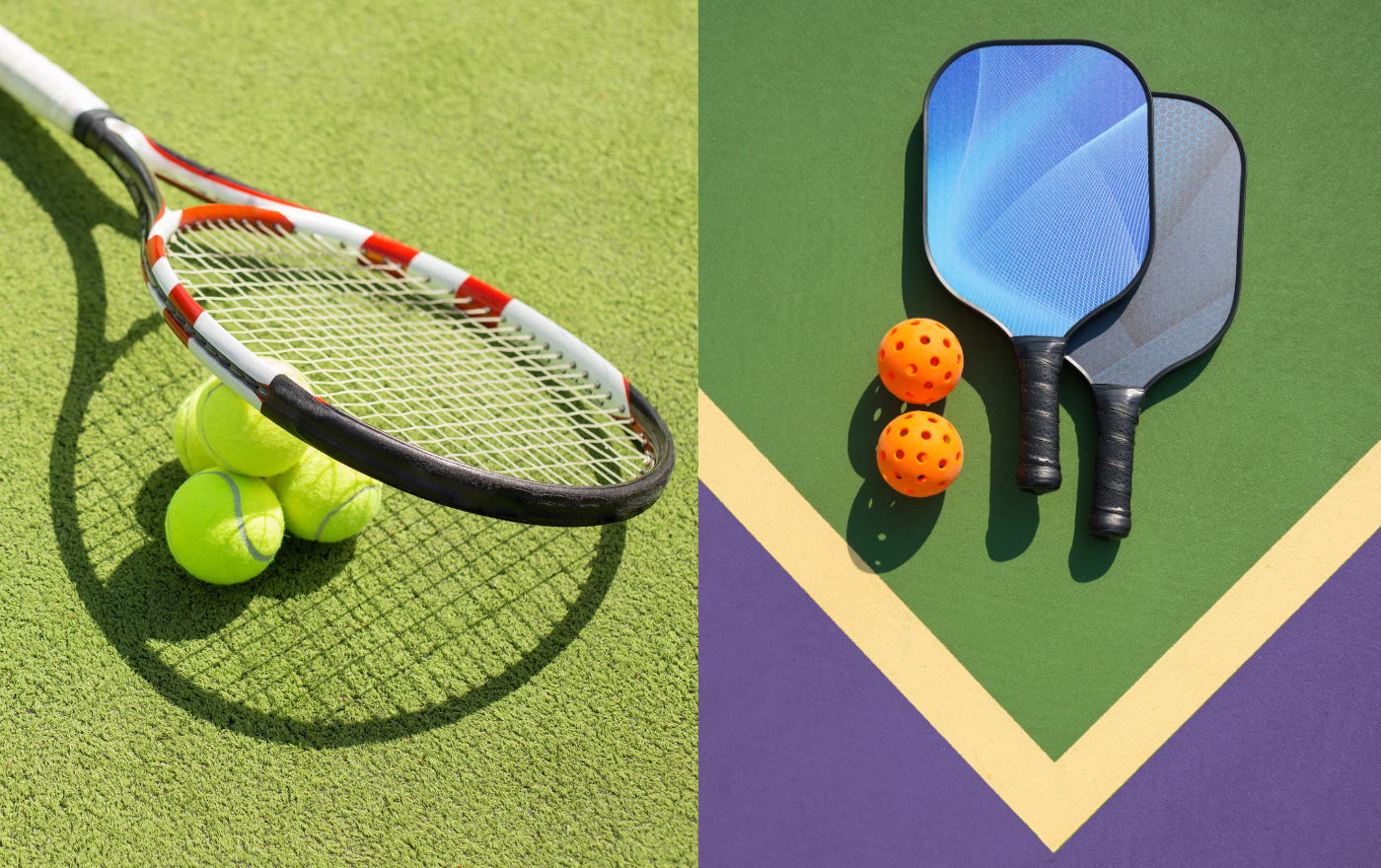
Tennis vs pickleball comparisons ultimately come down to several core distinctions spanning court size, equipment, scoring systems, and overall physical demands, even though both sports share certain superficial similarities as net-based racquet games.
Tennis emerged considerably earlier, developing into its modern recognizable form during the nineteenth century, while pickleball represents a much more recent invention, created in the late 1960s using improvised equipment on an existing badminton court.
This origin story genuinely explains much of pickleball’s distinctive court dimensions, since its inventors essentially adapted existing badminton court measurements rather than designing an entirely new playing surface specifically calibrated for the sport’s eventual gameplay.
Pickleball Court vs Tennis Court: Breaking Down the Size Differences
Comparing pickleball court vs tennis court dimensions reveals dramatic size disparities, with a standard pickleball court measuring just forty-four feet long and twenty feet wide, considerably smaller than tennis’s more expansive playing surface.
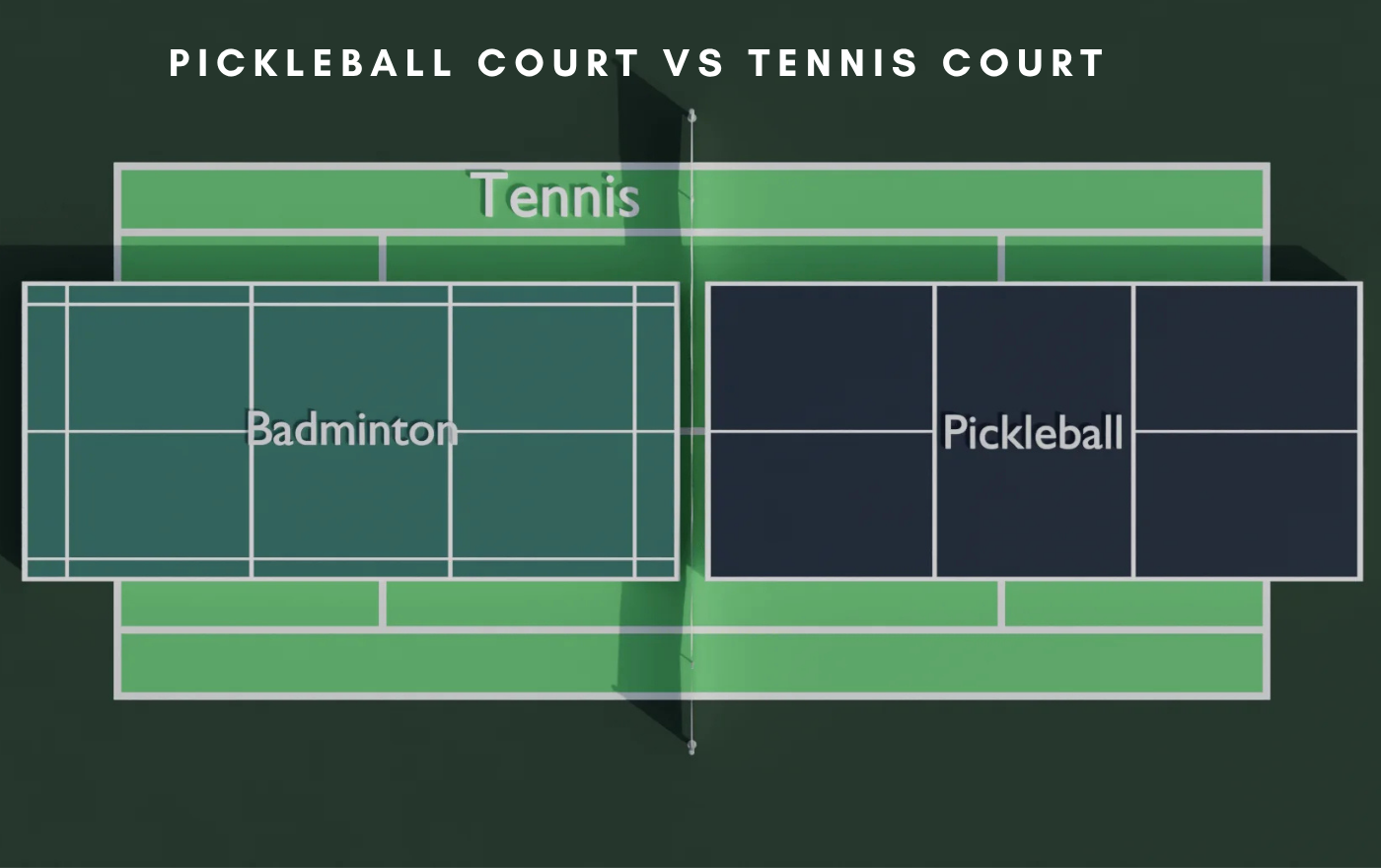
Tennis courts, by comparison, measure seventy-eight feet in length, with width varying between twenty-seven feet for singles matches and thirty-six feet for doubles play, reflecting tennis’s distinct court dimensions depending on match format.
This size difference means a single standard tennis court can actually accommodate up to four separate pickleball courts simultaneously, explaining why so many communities have converted existing tennis facilities specifically to expand pickleball access without requiring entirely new construction.
Understanding Singles Versus Doubles Court Variations
Tennis maintains genuinely different court dimensions depending on whether players compete in singles or doubles matches, with doubles matches utilizing additional side alleys that expand the total playable width considerably compared to singles competition.
Pickleball, by contrast, uses identical court dimensions regardless of whether players compete in singles or doubles format, simplifying court setup and eliminating the need for different boundary markings depending on match type.
This structural simplicity represents one of pickleball’s genuine accessibility advantages, since players and facility operators never need to distinguish between different court configurations based on whether a particular match involves two or four total competitors.
Net Height and Equipment Distinctions
Both sports utilize nets positioned across the court’s width, though pickleball nets sit slightly lower than tennis nets, measuring thirty-four inches at the center compared to tennis net height of thirty-six inches at the equivalent central position.
Tennis nets rise even higher at the posts specifically, reaching forty-two inches at each side, while pickleball nets maintain a more consistent thirty-six-inch height across their entire width from center through the outer posts.
Equipment differs substantially beyond net height too, since pickleball players use solid paddles lacking strings entirely, while tennis players rely on larger strung racquets designed specifically for generating power and spin against a considerably heavier felt-covered ball.
The Kitchen: Pickleball’s Distinctive Non-Volley Zone
Perhaps pickleball’s most distinctive rule involves the non-volley zone, commonly called “the kitchen,” extending seven feet from the net on both sides where players cannot legally hit volleys unless the ball has already bounced.
This zone fundamentally shapes pickleball strategy, forcing players to develop patience and precise shot placement rather than simply relying on aggressive net play, since standing within this zone while volleying results in an immediate rule violation.
Tennis contains no equivalent restriction whatsoever, allowing players to volley from literally any position on the court, including directly at the net, enabling considerably more aggressive net-rushing tactics than pickleball’s kitchen rule permits.
Comparing Scoring Systems Between the Two Sports
Tennis follows its traditional point progression system, counting individual points as fifteen, thirty, and forty before winning a game, requiring players to win six games with at least a two-game margin to capture a complete set.
Pickleball’s scoring system operates quite differently, typically playing to eleven points with a required two-point winning margin, and traditionally awarding points only to the serving team rather than following tennis’s system where either player can score regardless of serving status.
This scoring distinction significantly affects match pacing and strategic approach, since pickleball’s traditional side-out scoring system historically created situations where rallies could extend considerably longer before points actually accumulated on the overall match scoreboard.
Physical Demands and Fitness Requirements
Tennis generally demands considerably greater physical stamina and endurance, since covering the sport’s larger court dimensions requires sustained running, quick directional changes, and powerful groundstrokes across potentially lengthy multi-set matches.
Pickleball’s smaller court naturally reduces the pure physical distance covered during typical points, instead emphasizing quick reflexes, precise positioning, and rapid hand-eye coordination within a considerably more compact playing area.
This difference explains much of pickleball’s appeal across broader age demographics, since players can develop genuine competitive proficiency without necessarily possessing the elite cardiovascular conditioning that competitive tennis typically demands at higher skill levels.
Why Tennis Players Often Transition Successfully to Pickleball
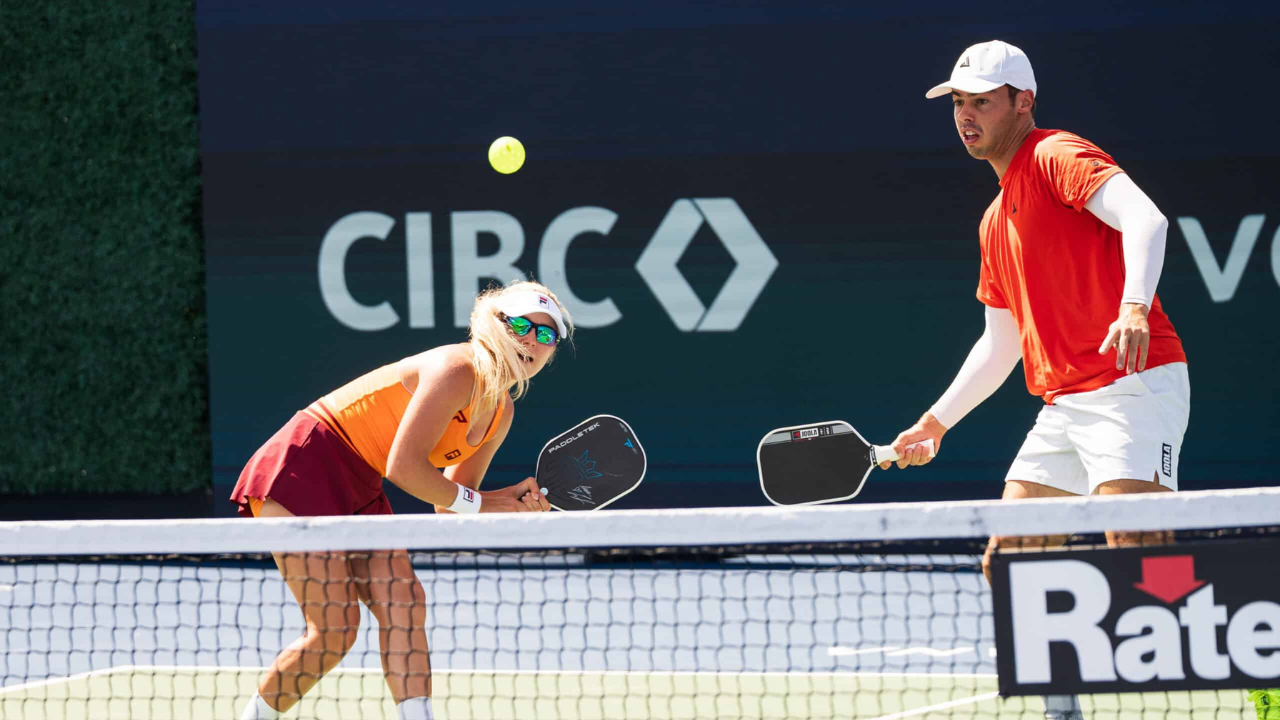
Tennis players frequently find pickleball a natural sport to attempt, since many fundamental skills, including shot placement, court positioning awareness, and basic hand-eye coordination, translate reasonably well between both racquet sports despite their different equipment.
Tennis-derived groundstroke technique, particularly topspin-heavy shots, often provides genuine competitive advantage when transitioning into pickleball, giving tennis players a meaningful head start compared to complete racquet sport newcomers learning pickleball as their first competitive sport.
Doubles pickleball nonetheless requires genuine adjustment even for experienced tennis players, since the kitchen rule and smaller court dimensions eliminate baseline-focused strategies that typically prove effective within tennis’s considerably more spacious doubles format.
Surface Materials and Court Construction Differences
Tennis courts feature considerably more surface variety compared to pickleball, including clay, grass, hard courts, and various synthetic materials, each producing genuinely different ball bounce characteristics and overall playing speed.
Pickleball courts typically utilize more standardized surface materials, generally constructed from asphalt or concrete with acrylic or polyurethane coating specifically designed to provide consistent ball bounce and reliable player traction throughout competitive play.
This surface standardization within pickleball partly reflects the sport’s relative youth compared to tennis’s considerably longer developmental history, during which various surface types emerged organically across different regions and competitive traditions worldwide.
Learning Curve and Beginner Accessibility
Many players and instructors describe pickleball as considerably more accessible for genuine beginners, since the smaller court dimensions and simpler equipment reduce the initial technical burden compared to tennis’s steeper learning curve.
Tennis typically requires more extensive technique development before players can sustain genuinely competitive rallies, particularly regarding serve mechanics and consistent groundstroke technique that often takes considerable practice time to develop reliably.
This accessibility difference has contributed significantly to pickleball’s recent explosive growth, particularly among older recreational players and complete racquet sport newcomers seeking a genuinely approachable entry point into competitive net-based sports.
Community and Social Dynamics Within Each Sport
Pickleball has developed a particularly strong reputation for fostering social community engagement, with the doubles-focused format and smaller court size naturally encouraging closer player interaction compared to tennis’s more spread-out competitive format.
This social dimension has become a genuine selling point for pickleball specifically, with many community recreation centers and dedicated facilities emphasizing the sport’s welcoming, interactive atmosphere as a distinct advantage over more individually-focused traditional tennis play.
Tennis maintains its own distinct social traditions too, particularly through club membership culture and doubles play, though the sport’s historically more individual competitive focus creates somewhat different community dynamics compared to pickleball’s typically more casual social atmosphere.
Choosing Between Tennis and Pickleball
Ultimately, selecting between these two genuinely different racquet sports depends heavily on individual priorities regarding physical intensity, available playing space, and whether someone prioritizes fast-paced strategic exchanges or more traditionally demanding athletic competition.
Many enthusiasts ultimately choose to play both sports rather than exclusively committing to one, recognizing that tennis and pickleball offer genuinely complementary athletic and strategic challenges despite their considerable differences in court dimensions and fundamental gameplay rules.
Whatever specific sport someone ultimately prefers, both tennis and pickleball continue attracting substantial and growing participant communities, ensuring both racquet sports remain genuinely accessible options for players across dramatically different age ranges and athletic ability levels.
Read Also: Gulmohar Plant: Complete Care Guide, Benefits, Growing Tips & FAQs