You have ten minutes before kickoff. You’re lacing up your boots, double-knotting out of habit, and somewhere in the back of your mind you wonder if the guy with the sleek laceless pair across the changing room has an edge on you. It’s a small thought, but it’s a real one. And if you’ve ever switched boots mid-season and felt the difference under your foot, you know the design matters more than people admit.
Choosing the right football shoes isn’t just about looks. It’s about how the ball sits on your foot at the moment of contact, how your ankle holds through a sharp cut, and whether you’re thinking about your gear or thinking about the game. This article breaks down exactly what laced and laceless boots offer so you can make a confident, informed choice.
How Laced Football Shoes Shape Your Feel and Fit
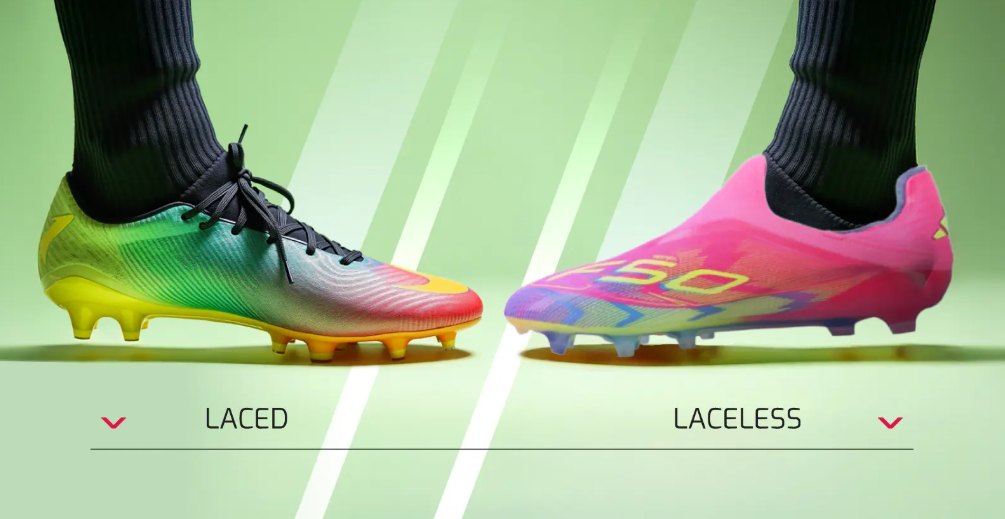
Laced boots have been the standard for over a century, and they’ve held that ground for a reason. The lacing system lets you control how snugly the boot wraps around your foot. Tighten the midfoot for lateral support, loosen the toe box for comfort on long sessions. That level of personal adjustment is hard to replicate.
The laces also create a slightly uneven surface across the upper, which can work in your favor. When you strike a ball with the inside of your foot, the texture from the lace area adds grip that helps you curl or dip the ball with more intent. Many technical midfielders and set-piece specialists prefer this for that reason alone.
The main drawback with laced boots is consistency. If your laces loosen mid-match, even slightly, your fit shifts. On wet ground or artificial turf, laces can get weighed down or come undone at the worst possible moment. It’s a small risk, but in a closely contested match, small things count.
What Laceless Football Boots Actually Change for Your Game
Laceless boots strip the upper down to one clean surface. There are no knots, no loose ends, and no variation across the contact area. When your foot meets the ball, it meets it the same way every single time. That repeatability is exactly what forwards and wide players are chasing when they switch to this style.
The fit in a laceless boot is usually achieved through an elasticated or wrap-style upper. This means the boot conforms to your foot shape over time. Once broken in, a laceless boot can feel more like a second skin than footwear. Players who take a lot of first touches at speed often find this improves their receiving game noticeably.
Key tip: Laceless boots tend to run narrow across the midfoot. If you have a wider foot, try them on before buying or check size guidance carefully. A poor fit eliminates any advantage the design offers.
There is a trade-off, though. Laceless boots offer less adjustability. If your feet swell during a long match or shift slightly across different surfaces, you cannot loosen the fit on the go. Some players also find that without the lace structure, lateral stability feels slightly reduced during aggressive changes of direction.
Choosing the Right Style for Your Position and Surface
Position matters more than most players realize when picking between these two styles. A central midfielder who covers ground constantly and needs precise passing accuracy tends to benefit from the customizable fit and textured feel of a laced boot. A striker or winger who values clean shooting and fast first touches often prefers the consistent surface of a laceless design.
Surface plays a role too. On firm ground or artificial turf, laceless boots perform reliably because conditions are consistent. On wet natural grass, laced boots give you the option to tighten up if conditions change. Both styles now come in outsole configurations for multiple surfaces, so your upper choice and your stud type are two separate decisions worth making independently.
If you’re still building your game and want one reliable pair that covers training and weekend matches, a well-fitted laced boot is typically the more versatile starting point. For players with a clear sense of how they play and what they need from their gear, laceless boots reward that self-knowledge.
The Right Boot Puts You in the Game, Not in Your Head
The best football shoes are the ones you stop thinking about. Whether that means the security of a laced fit or the clean strike surface of a laceless design depends on how you move, where you play, and what your feet actually need. Neither style is objectively superior. Both have earned their place on the pitch at every level.