Taxes are a significant factor in the operation of any nation as they are the source of revenue for the government to pay for the provision of infrastructure, health, education and public services. One of the most significant tax reforms in India is the implementation of the Goods and Services Tax (GST).The Goods and Services Tax (GST) is one of the major indirect tax reforms implemented in India. Having ever wondered what the full form of GST is and what the meaning of GST is, this guide answers every question in simple words and why it is a crucial thing.
The full form of GST is Goods and Services Tax which was implemented to phase out various indirect taxes in order to have a single tax system in place. The Goods and Services Tax was officially launched on 1st of July, 2017 and has altered the system of taxing goods and services in India.
What Is the Meaning of Acronym GST?
GST is an acronym for Goods and Services Tax. It is a tax on the supply of goods and services levied indirectly throughout India. Pre-GST tax levied were several taxes (VAT, service tax, excise duty and octroi) levied separately. To simplify and make taxation easier and clearer, all these taxes were merged into a single taxation system, GST.
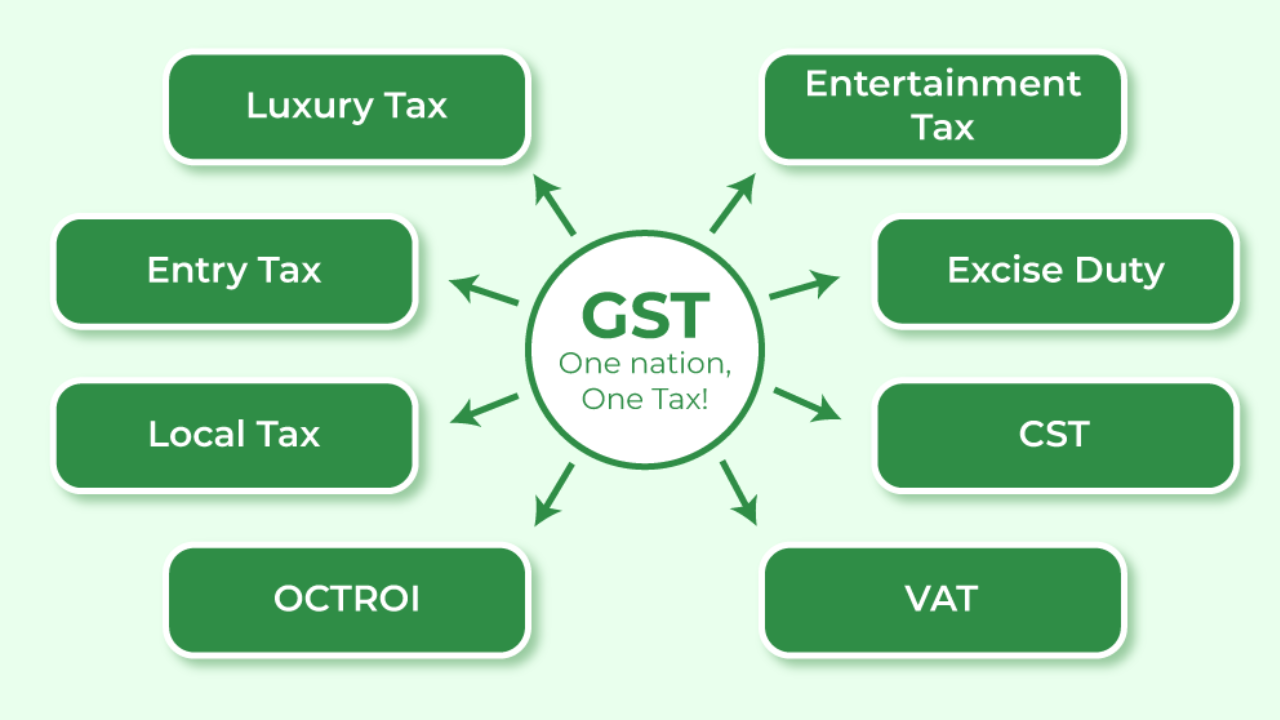
The primary aims of GST were to establish “One Nation, One Tax” policy to simplify the tax structure and abolish the cascading impact of tax.
How It Works
GST is based on destination principle of taxation. This implies that the tax is levied at the place of use of goods/services rather than at the place of production. For instance, if a product is created in one State and bought in another State, tax proceeds accrue to the State that they are the recipients.
The concept behind GST is also the “One Nation One Tax” policy. In the past, businesses were faced with a number of indirect taxes to be complied with, which were hard to handle. GST brought in this eases the process through a single tax regime.
Types of GST in India
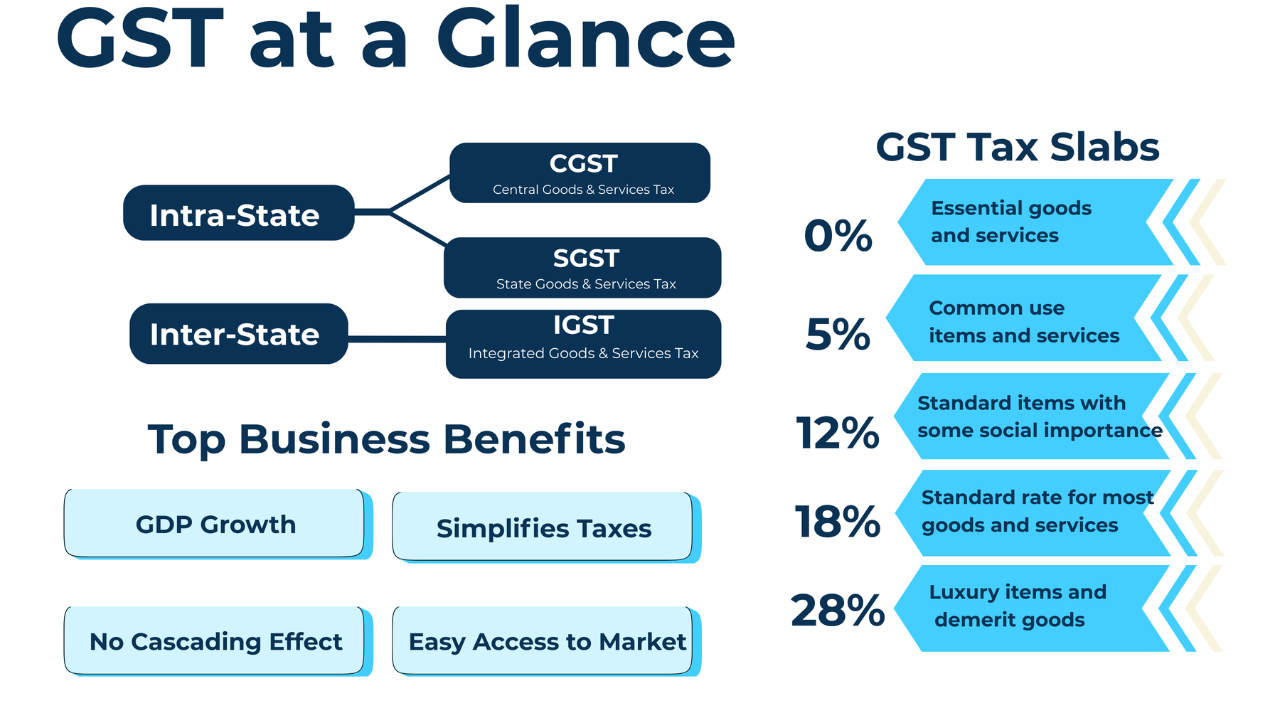
India is an implementation of the dual GST system where both the central government and state government collect tax. There are four major types of GST:
1. CGST (Central Goods and Services Tax)
CGST is collected if the transaction takes place in the same state by the Central Government.
2. State Goods and Services Tax (SGST)
The intra state sale and services is subject to the tax of the State Government named as SGST.
3. Integrated Goods and Services Tax (IGST)
IGST is applicable to cross state transactions or imports of goods/services between states.
4. Goods and Services Tax (GST)
UTGST is applicable in the Union territory where there is no any state government.
Read Also: Manav Sampada UP Login: Easy Guide to the eHRMS Portal
Key Features of GST
GST ushered in several enhancements to the tax regime in India. The following are important features:
- A single tax code to replace the various indirect taxes.
- We are filing compliance and are uploaded online so it is easy to manage.
- Input Tax Credit (ITC) is a mechanism to eliminate double taxation for inputs.
- Improved tax transparency on tax collection.
- Fewer and simpler steps in the tax filing process.
All these features have contributed to simplify tax compliance for businesses and to improve system efficiency.
Benefits of GST for Businesses and Consumers
Benefits for Businesses
GST eliminated the hassle of having to keep a lot of tax records. There is a now a more standard approach and it’s easier to be compliant.
This also enhanced logistics and minimized delays due to state level checkpoints and tax issues.
Benefits for Consumers
The advantage to consumers is that they experience the “tax on tax” effect being eliminated as a consequence of GST. It also provides greater visibility into product pricing, and a consistent tax structure across the nation.
Popular Myths Concerning GST
Myth 1: GST is Just Another Tax
This is incorrect. GST have replaced the different indirect taxes and brought them under a single tax system.
Myth 2: GST Only Helps Big Businesses
GST is beneficial to businesses both large and small, including through simplified schemes and enhanced compliance systems.
Myth 3: GST Raised the Cost of Everything
It should help to eliminate the cascading impact of tax, which should help to keep the prices of many goods and services fair.
Myth 4: Small Businesses Cannot Benefit from GST
Small businesses are also rewarded with a better-illuminated and organized taxation system.
Why GST Matters in India’s Economy
Though the full form of GST is simple, the effect it has on the economy of India is far from simple. GST enhanced tax transparency, made compliance less burdensome and assisted in integration of the economy between the states. It also played a role in devising a common market by replacing the old tax structures.
Final Word
The full form of GST is Goods and Services Tax which is one of the largest tax reforms of India. GST streamlined tax process for both consumers and businesses by replacing several indirect taxes and establishing a common taxation framework. Comprehending GST aids individuals and business entities to appreciate how India’s tax system functions in the modern setup.
FAQs
1.What is the Full form of GST?
GST is Goods and Services Tax which is an indirect tax imposed on goods and services in India.
2. In which year did GST come into existence?
The Goods and Services Tax (GST) was formally launched on 1st July 2017.
3. What are the 4 types of gst?
There are four types of tax: CGST, SGST, IGST, and UTGST.
4. What were the taxes replaced by GST?
GST has superseded taxes like VAT, service tax, excise duty and octroi.
5. Is GST beneficial for consumers and businesses?
Yes, GST will bring transparency, make tax system simpler and will remove cascading effect of taxes.
Read More: The Techno Tricks: Your Ultimate Guide for Social Media Growth in 2026