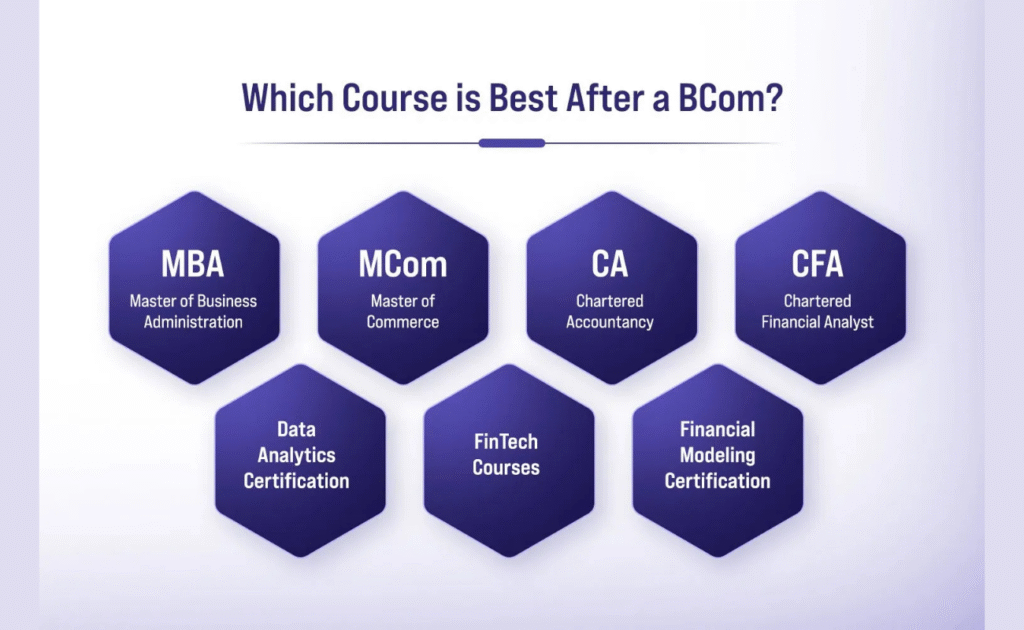
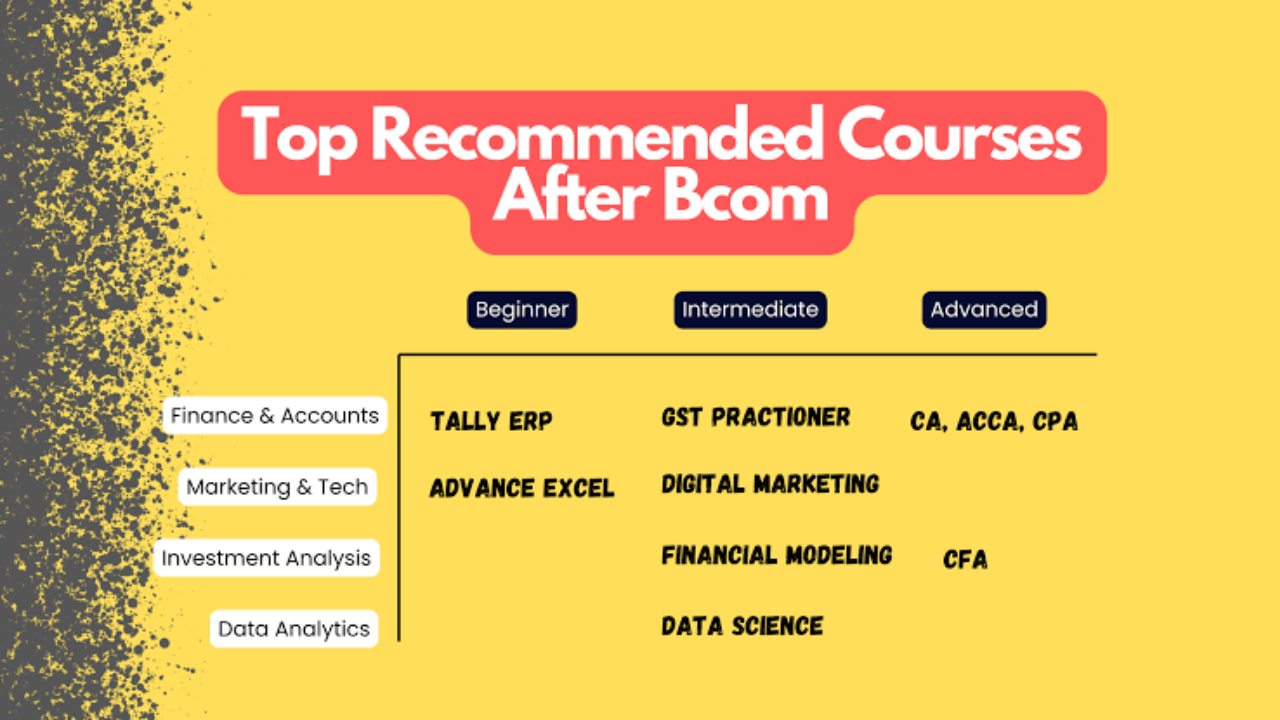
So you’ve finished B.Com and now what? Honestly, this is the point where a lot of students freeze up a bit. Everyone around you seems to be doing something different – one friend is prepping for CA, another has joined an MBA coaching class, someone else is talking about digital marketing. It gets confusing fast. This blog is here to cut through that noise a little and walk you through the courses that actually make sense after B.Com, so you can pick something based on what suits you, not just what’s trending among your batchmates.
Why Even Bother With a Course After B.Com?
Here’s the thing – a B.Com degree gives you a decent base. You know some accounting, a bit of economics, some business concepts. But on its own, it doesn’t always get you the kind of job or salary you’re hoping for. Companies these days want people who know one thing really well, not people who know a little of everything. That’s where a specialised course comes in. It sharpens your skills in one direction and, more often than not, it also bumps up your earning potential. So before jumping into whatever job comes your way first, it helps to sit down and figure out which direction actually excites you.
1. Chartered Accountancy (CA)
Let’s start with the one almost every commerce student has heard about a hundred times – CA. It’s tough, no doubt about that. There are multiple levels to clear, and it can take a few years of consistent studying before you’re done. But once you’re a qualified CA, the doors that open are genuinely impressive. Every business, big or small, needs someone to handle accounts, taxation, and audits, so the demand never really dries up. If you’re someone who doesn’t mind long study hours and actually enjoys working with numbers and rules, CA could turn out to be one of the best calls you make.
2. MBA (Master of Business Administration)
MBA is the go-to option for a huge chunk of commerce graduates, and for good reason. It is not just about money; you can choose from marketing, HR, operations, international business or even more recent like business analytics. The advantage of the MBA is that it will take you much quicker into the arena of management and leadership than other professions. The good institutes get their students jobs in good firms with decent packages and even if you are not from a top college, an MBA is a legitimate addition to your CV.
3. Company Secretary (CS)
Not everyone loves the idea of pure numbers, and that’s fine – CS might be more your thing. This course is built around company law, compliance, and making sure businesses follow all the legal rules they’re supposed to. Every registered company needs this kind of expertise somewhere in their team, so the need for CS professionals stays fairly steady over time. If legal and regulatory work sounds interesting to you, this is worth a serious look.
4. CMA (Cost and Management Accountant)
CMA is a slightly different approach to CA, primarily considering what a company does to manage its own internal expenses and budgets and financial planning. Many manufacturing and production-oriented organizations actively recruit CMAs to manage costs and increase their profit margins. You’ll be able to work on cost control and budgeting, and this one’s for you.
Read Also: WAEC Questions and Answers on Mathematics 2018: Full Guide for Students
5. M.Com (Master of Commerce)
If you genuinely enjoyed your B.Com subjects and just want to go a level deeper, M.Com is the natural next step. It works especially well if you’re thinking about teaching or research later, or if you’re planning to sit for exams like UGC NET down the line, since a postgraduate degree is usually required for those. It’s not the flashiest option out there, but it keeps academic and government job routes open.

6. CFA (Chartered Financial Analyst)
If you are considering investment banking, portfolio management, or any related field in the financial markets, you will find CFA popping up frequently. CFA is more about analysing investments and making smart financial decisions, unlike CA which heavily relies on accounting. It is also recognised worldwide and students who aspire to work in mutual funds, stock markets, or international finance opt for this route.
7. CPA (Certified Public Accountant)
Compare and contrast CPA to CA, the American cousin. It is constructed on U.S. accounting practices and taxation, which is a good option in case you intend to work in the United States or with U.S. businesses from India. If you are seeking an international career or simply working with international clients, CPA is certainly a good career path to consider.
8. FRM (Financial Risk Manager)
FRM is meant for people who want to get into risk management, mainly within banks and financial institutions. As companies get more cautious about financial risks – and honestly, who isn’t these days – the need for people who understand risk analysis and financial modelling keeps growing. If numbers and risk both interest you, this can lead to some genuinely high-paying roles.
9. Digital Marketing
Now, not every commerce grad wants to spend their life around balance sheets, and that’s completely okay too. Digital marketing has grown into a real career option over the last few years, and commerce students often adapt to it well because they already understand business basics. A decent course can teach you SEO, social media handling, content strategy, and paid ad campaigns. Almost every industry needs this skill set now, so it’s a pretty future-proof choice.
10. Data Analytics
Data is everywhere now, whether we like it or not, and businesses are desperate for people who can make sense of it. Commerce students, who are already comfortable with numbers, often pick this up faster than expected. A good data analytics course usually covers Excel, SQL, Power BI, and basic visualisation tools. If you like working with numbers but want something a little more modern and tech-leaning than traditional accounting, this is a great direction.
Okay, So How Do You Actually Choose?
With this many options, it’s easy to feel stuck. A few honest questions can help you narrow it down:
- What do you actually enjoy? Numbers and audits, or people and strategy?
- How much time can you give? CA and CFA need years of patience. Digital marketing or data analytics certifications can be done much quicker.
- What’s your budget like? A top MBA college can be expensive, while something like CMA or CS is usually lighter on the pocket.
- Where do you see yourself later? Long-term corporate stability points toward CA, CS, or MBA. If you want flexibility or something newer, digital marketing or data analytics fits better.
Final Word
There’s really no one course that’s “the best” for everyone after B.Com. It genuinely depends on what you’re good at, what you can afford, and where you want to be a few years down the line. If numbers and precision excite you, CA, CMA, or CFA can build you a strong, stable career. If you’re more drawn to leadership and big-picture thinking, MBA is hard to beat. And if you want to try something a bit different from the usual commerce path, digital marketing or data analytics are both growing fast and worth considering. Take a breath, think about what you’d actually enjoy doing every day, and pick the course that fits you – not just the one everyone else seems to be choosing.
Read More: LLB Full Form: Meaning, Eligibility, Syllabus & Career Scope