
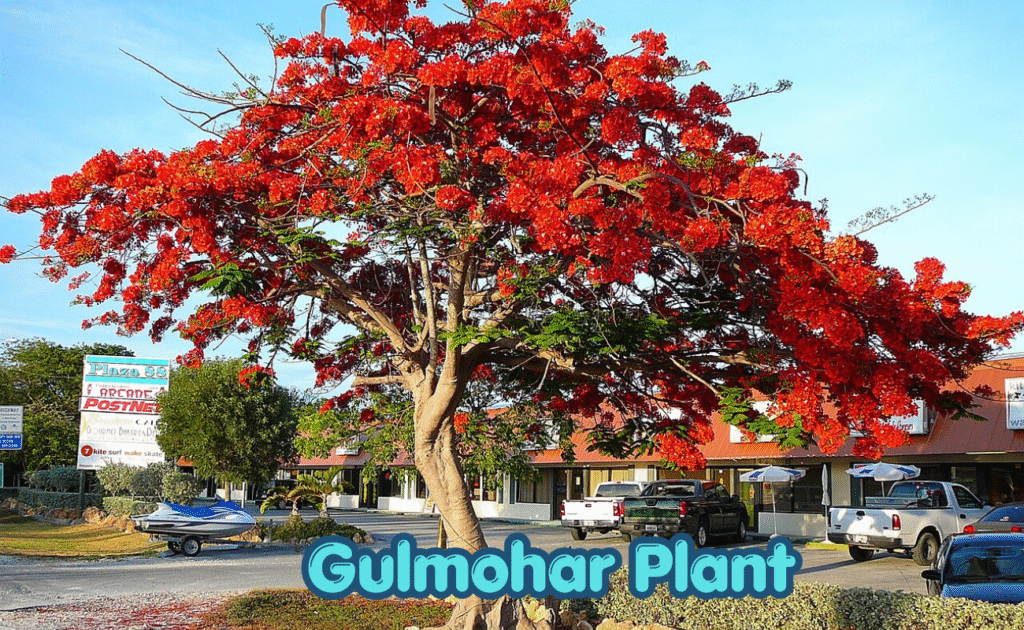
If you have ever driven down an old Indian road in early summer and suddenly found yourself under a canopy of blazing red and orange flowers, chances are you were passing beneath a row of gulmohar trees. There is something almost unfair about how beautiful they are. For months they just sit there, looking like any other tree — a bit scraggly, lots of green, nothing special. Then, out of nowhere, they explode into color, and for a few weeks the whole neighborhood feels like a festival.
What Is It Actually Called?
The gulmohar is known by a bunch of names depending on where you are. Some people call it the flame tree, others know it as the royal poinciana, and in parts of the Caribbean they just call it flamboyant — which, honestly, fits perfectly. Scientists call it Delonix regia, but that sounds far too serious for a tree this dramatic. It belongs to the pea family, which is funny because nothing about it looks like a pea plant. It is native to Madagascar originally, but you would never guess that from how comfortably it has settled into India, Southeast Asia, Africa, and the Americas. Give it sun, a bit of space, and warm weather, and it acts like it has always lived there.
The Flowers That Steal the Show
What makes the gulmohar so hard to miss is the flower. Each bloom is small on its own — maybe a couple of inches across — but they grow in huge clusters that cover the entire tree from top to bottom. The petals are a bright, almost aggressive orange-red, with one petal usually streaked with yellow and white. When the whole tree is in flower, it looks like someone set it on fire and forgot to put it out. The flowers hang above a canopy of feathery, fern-like leaves that are delicate and green, almost lacy. The contrast is what gets you — soft green leaves against those loud, unapologetic flowers.
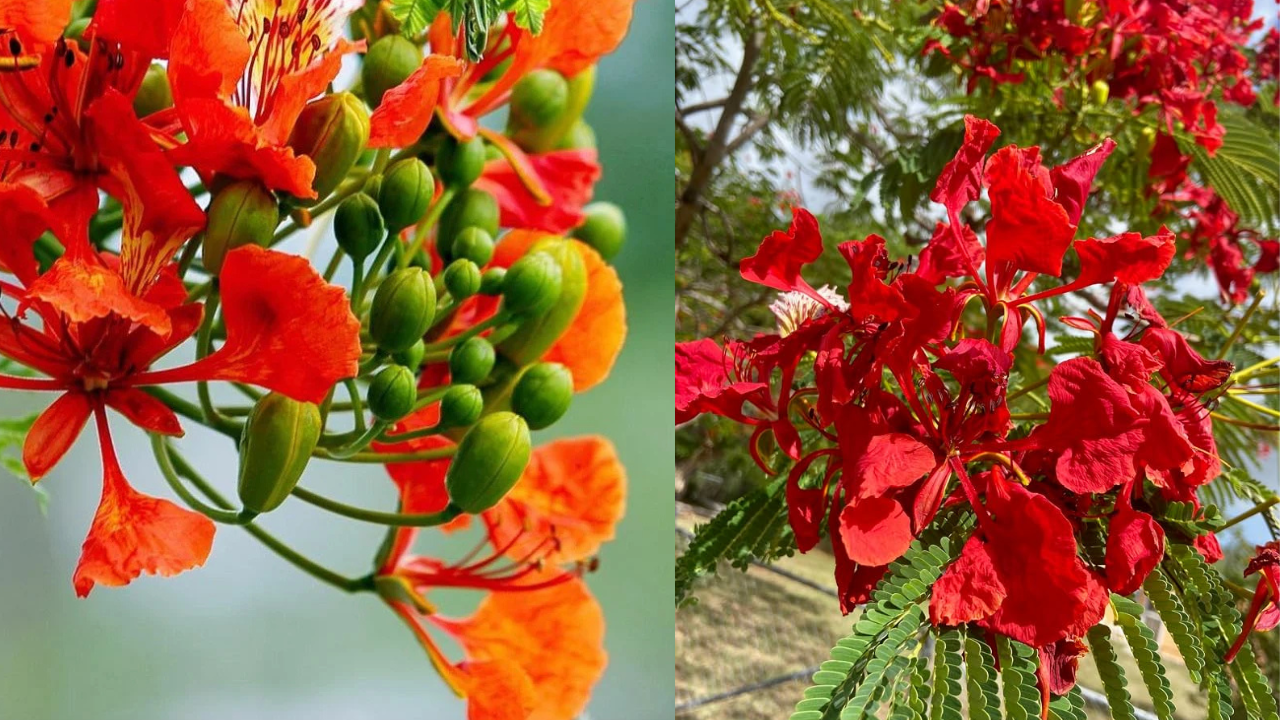
The flowering season is usually from April to June in most tropical places, right when the heat is starting to get unbearable. It is almost like the tree knows people need something cheerful to look at while they are sweating through their shirts. In some regions, you might get a second, lighter bloom around September or October, but the summer show is the main event. And when the flowers start falling, they carpet the ground beneath the tree in red and orange. Kids love running through the fallen petals. Adults pretend they do not, but you can see them slowing down to look.
Read Also: 190C is What in Fahrenheit? Complete Conversion Guide with Cooking Tips
Size, Shade and Long Life
The tree itself can grow quite large — anywhere from 20 to 40 feet tall, sometimes even more if it really likes where it is planted. It has a wide, umbrella-shaped canopy that spreads out horizontally rather than shooting straight up. That makes it an excellent shade tree. If you have ever sat under a full-grown gulmohar on a hot afternoon, you know the kind of thick, dappled shade it provides. It is not the thin, patchy shade you get from some trees. It is proper, heavy shade that actually cools you down. Old schools, railway stations, and village squares across India often have one or two massive gulmohars standing guard, and they have probably been there for decades.
Speaking of age, these trees can live for a long time — fifty years or more if they are healthy. They are not particularly fussy about soil, which helps. Sandy, loamy, slightly clay-ish — they will manage in most places as long as the ground drains well. They hate waterlogging, though. Leave their roots sitting in water and they will sulk and eventually give up. They also love sunlight. A gulmohar stuck in deep shade will survive, but it will not flower much, and what is the point of a gulmohar that does not flower?
Why People Really Love It
People do not usually plant gulmohars for fruit or timber. The wood is soft and not great for construction. The long, flat seed pods look interesting — they can grow up to two feet long and rattle when they dry — but they are not edible. The real value of this tree is entirely visual and emotional. It makes places prettier. It gives shade. It marks seasons. In many Indian towns, the first gulmohar bloom is how people know summer has truly arrived, the same way mangoes in the market do.
There is also something deeply nostalgic about this tree. If you grew up anywhere near one, you probably have memories attached to it — waiting for a school bus under its shade, collecting the dried pods to use as swords or rattles, or just lying on the ground looking up at the red flowers against a blue sky. It shows up in paintings, in old Bollywood songs, in poems written by people who probably should not be writing poems but were inspired by a gulmohar in full bloom anyway.
How to Grow One
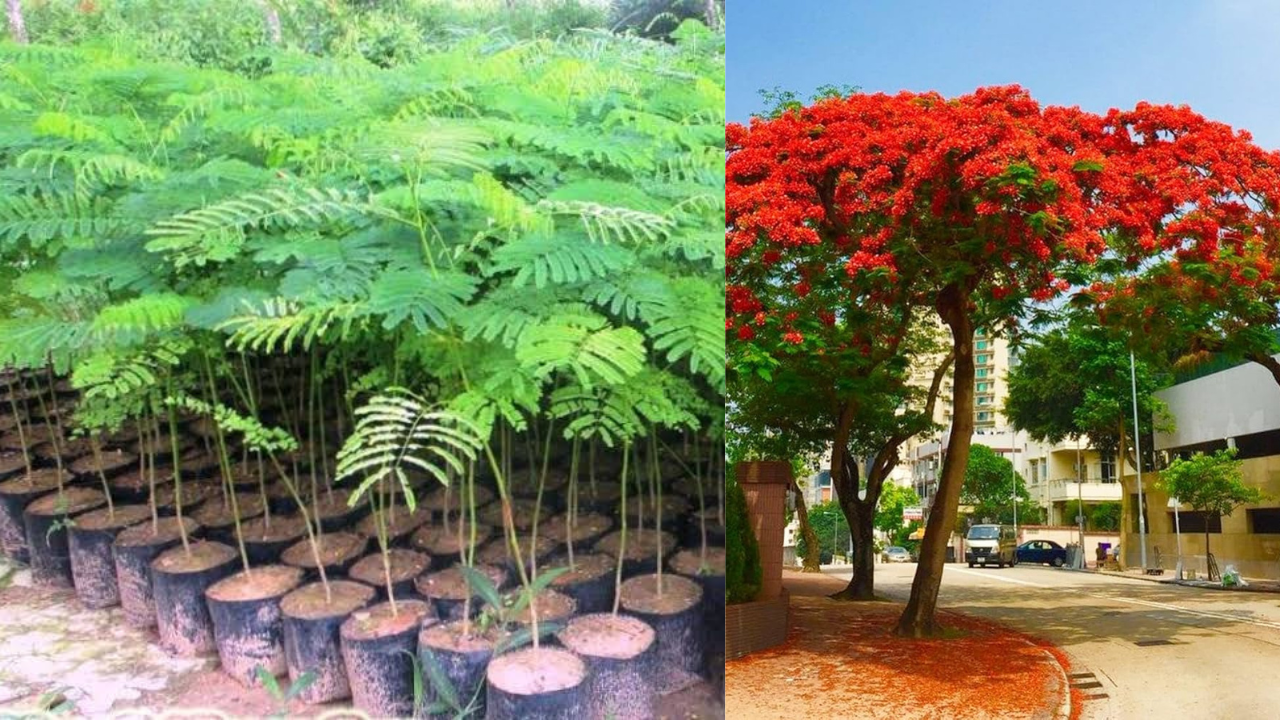
For anyone thinking of planting one, the best way is from seed. The seeds are inside those long pods, and they germinate easily if you soak them in warm water for a day before planting. They grow fast when young — sometimes two to three feet in a year — so you will not have to wait decades for shade. Just make sure you plant it somewhere with room to spread, because trying to keep a gulmohar small through pruning is a losing battle. It wants to be big and broad, and you should let it.
In cities, they work well along wide roads and in parks. In gardens, you need space — a lot of it. Do not plant one right next to your house unless you want roots in your foundation and a canopy blocking all your windows. They drop flowers, leaves, and pods regularly, so they are not the tidiest trees. But honestly, if you are complaining about sweeping up gulmohar petals, you might be missing the point.
Final Word
There are not many trees that can stop traffic just by being in a good mood. The gulmohar does that every summer, without trying, without asking for anything except a bit of sun and room to grow. If you have one near you, go look at it while it is flowering. If you do not, plant one and wait. It is worth it.
Read More: WSG Meaning: What It Really Means & How to Use It